






































































































































































How to Improve Gut Health Naturally: 12 Evidence-Based Habits
Author: RVLNSV PRASAD
Updated On: October 2026
About Us
Author Bio
Editorial Policy
Contact Us
Introduction
Your gut does much more than break down food. It helps absorb nutrients, supports regular bowel movements, interacts with your immune system, and houses trillions of microorganisms that contribute to digestion and other biological processes. These microorganisms form part of what researchers call the gut microbiome.
Interest in the microbiome has grown as researchers investigate how diet, lifestyle, medicines, and the environment influence the organisms living in the digestive tract. However, not every claim about gut health is supported by strong evidence. A healthy gut does not require expensive supplements, a strict detox, or a complete dietary overhaul.
For most people, a more practical starting point is to eat a variety of fiber-rich foods, include suitable fermented foods, stay physically active, get enough sleep, and pay attention to persistent digestive symptoms. Harvard’s guide to the human microbiome explains how diet and other factors influence the microorganisms living in and on the body.
This guide explains how to improve gut health naturally with realistic habits, familiar foods, current research, and advice on when professional medical care matters. It also separates promising research from claims that still need better evidence.
Quick Answer: How Can You Improve Gut Health Naturally?
You can support gut health by eating a varied diet rich in vegetables, fruits, beans, lentils, whole grains, nuts, and seeds. Increase fiber gradually, drink enough fluids, and consider fermented foods such as yogurt with live cultures or other suitable fermented products. Regular physical activity, adequate sleep, and consistent meal routines can also support digestive well-being.
There is no single food, supplement, or home remedy that guarantees a healthy microbiome. If you experience persistent pain, ongoing diarrhea, unexplained weight loss, blood in your stool, or a lasting change in bowel habits, seek medical advice rather than relying on home remedies.
Key Takeaways
- Eat more types of plant foods. Different foods supply different fibers and plant compounds that gut microorganisms can use.
- Increase fiber gradually. A sudden increase may cause gas, bloating, or discomfort.
- Choose fermented foods if they suit you. Yogurt with live cultures, kefir, and some fermented vegetables can be useful options.
- Do not assume every probiotic supplement is necessary. Benefits depend on the strain, dose, condition, and individual.
- Build habits you can maintain. Sleep, activity, hydration, and a varied diet matter more than a complicated gut-health routine.
- Take ongoing symptoms seriously. Gut-health advice is not a substitute for diagnosis or treatment.
1. Understand What the Gut Microbiome Does
The gut microbiome refers to the community of microorganisms living in the digestive tract. It includes bacteria and other microbes, along with their genetic material. The composition of this community differs among people and can change with diet, medicines, age, illness, and environmental exposures.
Some gut microorganisms help break down components of food that human digestive enzymes cannot fully digest. When certain fibers reach the large intestine, microbes ferment them and produce substances such as short-chain fatty acids. These compounds are involved in processes that researchers are still studying, including the maintenance of the intestinal environment.
The microbiome is not simply a contest between “good bacteria” and “bad bacteria.” Many microorganisms have different effects depending on their species, location, and the wider microbial community. A microbe that is harmless in one setting may cause problems in another.
Harvard’s overview of the microbiome describes the relationship between microorganisms, diet, and human health. It is a useful starting point for understanding why a varied diet is generally more practical than trying to target one supposedly perfect bacterium.
What this means in everyday life: You do not need to know the exact composition of your microbiome to start making useful changes. A balanced eating pattern and attention to your symptoms are more practical first steps than purchasing a commercial microbiome test without a clear medical reason.
2. Eat More Fiber-Rich Foods Every Day
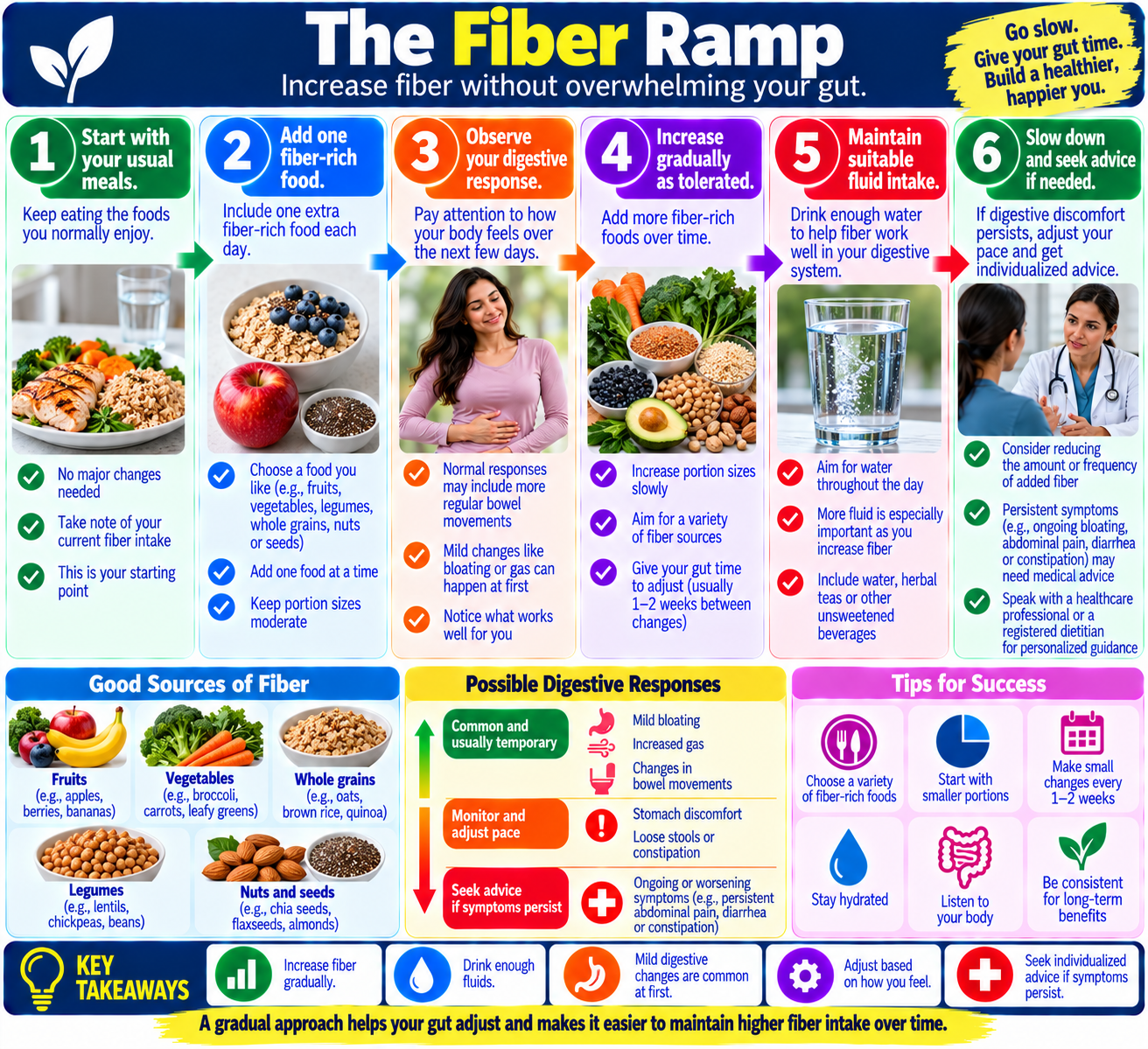
Fiber is one of the most useful dietary starting points for digestive health. Some types of fiber help add bulk to stool, while others can be fermented by gut microorganisms. Eating a variety of fiber-containing foods provides different forms of fiber rather than relying on a single source.
Useful options include:
- Oats and other whole grains
- Beans, chickpeas, peas, and lentils
- Apples, pears, berries, and other whole fruits
- Leafy greens, carrots, and other vegetables
- Chia seeds, flaxseeds, almonds, and other nuts or seeds
The US National Institutes of Health provides background on dietary fiber and health. Harvard’s microbiome resource also explains why fiber-rich foods are important for gut microorganisms.
How to increase fiber without making bloating worse
Do not suddenly double your fiber intake. If your usual meals contain little fiber, a large increase can lead to gas, bloating, or abdominal discomfort.
Instead, add one manageable change at a time. You might have oats at breakfast, add lentils to lunch, or include a vegetable with dinner. Drink fluids regularly, especially when increasing fiber intake, unless a clinician has advised you to restrict fluids.
People with irritable bowel syndrome (IBS), certain bowel disorders, or a history of intestinal narrowing may need individualized advice about the types and amounts of fiber they can tolerate.
Practical insight: Rather than trying to eat an unfamiliar “superfood” every day, improve a meal you already enjoy. Adding beans to a familiar curry or including vegetables with rice may be easier to maintain than following a complicated diet plan.
3. Include a Wider Variety of Plant Foods
Eating more fiber is useful, but variety matters too. Different plant foods contain different combinations of fibers, vitamins, minerals, and polyphenols. These compounds may affect gut microorganisms in different ways.
Try rotating your choices across the week instead of eating exactly the same vegetables, grains, fruits, and pulses every day. You do not need to buy costly specialty ingredients to do this.
For example, an Indian-style eating pattern can include:
- Dal, chickpeas, rajma, or other pulses
- Oats, whole-wheat roti, or other whole grains
- Seasonal vegetables such as beans, carrots, gourds, and leafy greens
- Whole fruits such as guava, oranges, apples, or papaya
- Peanuts, sesame, chia, or flaxseed in suitable portions
These are examples, not a prescribed menu. Choose foods that suit your budget, culture, preferences, and digestive tolerance.
Harvard’s guide to feeding your gut highlights fiber-rich foods and fermented foods as practical parts of a gut-supportive eating pattern.
A simple plant-variety challenge
For one week, notice which plant foods you already eat. Then add a few different options across meals. You do not need to chase a strict number of plant species or treat variety as a competition. The goal is to build a sustainable pattern that offers a range of nutrients and fibers.
4. Try Fermented Foods That Suit Your Diet
Fermented foods are made through the activity of microorganisms. Depending on the food and how it is processed, they may contain live microorganisms, fermentation products, or both.
Options include yogurt with live cultures, kefir, and some fermented vegetables. Traditional fermented foods differ in their ingredients and preparation, so they should not all be assumed to provide the same organisms or effects. Heat treatment and processing can also affect whether live cultures remain in the finished product.
A 2025 systematic review and meta-analysis examined 25 studies involving 4,328 participants, with 19 randomized controlled trials included in its meta-analysis. The researchers reported possible benefits of fermented foods for bowel movement frequency, stool consistency, and some gastrointestinal symptoms. However, the certainty of evidence varied and was often low, so the findings should not be interpreted as proof that every fermented food works for everyone. Read the 2025 review in Frontiers in Nutrition.
How to choose fermented foods
- Choose products that fit your dietary needs and preferences.
- If you eat dairy, consider plain yogurt that identifies live cultures.
- Compare labels and choose options with less added sugar when possible.
- If you prefer plant-based products, check their ingredients and whether they contain live cultures.
- Start with a small portion if fermented foods are unfamiliar or tend to trigger symptoms.
Fermented foods are optional, not compulsory. If a particular food causes discomfort, stop eating it and consider another option.
5. Understand Prebiotics and Probiotics
These terms are related, but they do not mean the same thing.
Prebiotics are substances, often specific types of fiber, that are used by microorganisms in ways associated with a health benefit. Foods such as onions, garlic, legumes, oats, and certain other plant foods provide fibers that can serve as microbial fuel, although individual tolerance varies.
Probiotics are live microorganisms that provide a health benefit when administered in adequate amounts. The effects of probiotics are specific to the strain or combination and the condition being studied. A product should not be assumed to provide a general benefit simply because its label says “probiotic.”
Harvard’s probiotics resource explains that the evidence differs between products and that a varied diet containing fiber-rich foods is a useful foundation for supporting the gut microbiome.
Do you need a probiotic supplement?
Not necessarily. Supplements may be appropriate for particular medical situations, but they are not essential for everyone. Evidence for one strain or condition does not automatically apply to another. Some people, particularly those who are seriously ill or immunocompromised, should discuss probiotic use with a healthcare professional before taking a supplement.
Avoid choosing a product solely because it promises to “reset” the gut, eliminate toxins, or cure multiple unrelated conditions. Those are broad claims that require stronger evidence than a marketing label provides.
6. Limit Excessive Added Sugar and Highly Processed Foods
You do not need to eliminate all sugar or every packaged food to support gut health. The more useful goal is to make nutrient-rich foods a regular part of your eating pattern while limiting foods that crowd them out.
A diet dominated by sugary drinks, sweets, and highly processed snack foods may provide less fiber and fewer beneficial nutrients than a varied diet containing whole grains, pulses, vegetables, and fruit. The exact effect of a food also depends on its ingredients, portion, and the rest of the diet.
Avoid the oversimplified claim that eating sugar directly feeds only “bad bacteria.” The microbiome is complex, and dietary effects depend on the overall pattern rather than a simple good-versus-bad distinction.
Easy changes to try
- Replace some sugary drinks with water or unsweetened drinks.
- Add fruit to breakfast instead of relying only on sweet packaged foods.
- Pair snacks with nuts, seeds, or other nutrient-rich options when suitable.
- Choose whole grains more often if you tolerate them.
- Keep favorite treats in reasonable portions rather than following an unnecessarily restrictive diet.
A flexible approach is generally easier to sustain than a long list of forbidden foods.
7. Drink Enough Fluids to Support Digestion
Water is important for normal body function, and adequate fluid intake can help fiber do its job. However, there is no single amount that is right for every person. Fluid needs vary with body size, climate, activity, diet, pregnancy, and health conditions.
A practical approach is to drink regularly throughout the day and pay attention to thirst and your usual circumstances. Hot weather and exercise may increase fluid needs. People with kidney, heart, or other conditions that require fluid restriction should follow their clinician’s advice rather than applying general hydration rules.
Water is a useful everyday choice. You do not need lemon water, detox drinks, or special gut-cleansing beverages to make your digestive system work.
Common mistake: Increasing fiber significantly while ignoring fluid intake can make constipation more uncomfortable for some people. Increase fiber gradually and consider both food and fluid habits together.
8. Move Your Body Regularly
Physical activity supports overall health and may help some people maintain regular bowel habits. Movement does not need to be intense to count. Walking, cycling, swimming, dancing, and other activities you enjoy can help you build a consistent routine.
For general adult health, the US Centers for Disease Control and Prevention’s physical activity guidance recommends at least 150 minutes of moderate-intensity aerobic activity per week, along with muscle-strengthening activity on two days. These are broad public health recommendations, not a treatment plan for a digestive disorder.
An easy way to start
If you spend much of the day sitting, try a short walk after a meal or take brief movement breaks during work. Build duration and intensity gradually, especially if you are inactive or have a medical condition that affects exercise.
Do not assume that a workout will cure bloating, reflux, IBS, or another digestive condition. Exercise can be one part of a healthy routine, but persistent symptoms need appropriate assessment.
9. Pay Attention to the Gut-Brain Connection
The gut and brain communicate through a network that includes nerves, hormones, immune signals, and microbial metabolites. This is often called the gut-brain axis. Researchers are investigating how these pathways relate to digestion, stress, and aspects of mental health.
The relationship is complex. Stress can affect how some people experience abdominal discomfort or changes in bowel habits, while ongoing digestive symptoms can also increase stress. However, this does not mean that every digestive problem is caused by anxiety or that changing the microbiome is a proven treatment for a mental health condition.
A review of fiber, fermented foods, and the microbiota-gut-brain axis discusses emerging evidence while noting that the mechanisms and human effects still need further study. See the research review indexed in PubMed.
Simple stress-management habits
Consider a short breathing exercise, a quiet walk, a regular bedtime, or a few minutes away from screens when you feel overwhelmed. Choose a method that is comfortable and realistic for you.
These practices may support general well-being, but they should not replace appropriate treatment for persistent anxiety, depression, or digestive symptoms.
10. Protect Your Sleep Routine
Sleep affects many aspects of health, and poor sleep can make it harder to maintain regular meals, activity, and other daily habits. Researchers are also exploring links between sleep patterns and the gut microbiome, but this area is still developing.
Do not interpret early microbiome findings as proof that one sleep schedule will restore your gut or cure digestive symptoms. Focus on sleep habits that are broadly helpful.
Try to keep a fairly consistent sleep and wake time, create a comfortable sleeping environment, and allow enough time for rest. Reduce late-night activities that interfere with sleep if you find them disruptive.
If persistent digestive symptoms regularly wake you from sleep, discuss them with a healthcare professional rather than assuming they are simply a lifestyle issue.
11. Be Careful With Antibiotics and “Gut Reset” Products
Antibiotics are important medicines that treat certain bacterial infections. They can also affect gut microorganisms, sometimes causing side effects such as diarrhea. The effects depend on the medicine, the person, and other factors.
Take antibiotics only as prescribed, follow your clinician’s instructions, and do not use leftover antibiotics or someone else’s medication. Do not stop a prescribed course or change the dose on your own; contact the prescriber if you have concerns or side effects.
There is no universally proven home remedy that instantly restores the microbiome after antibiotics. A varied diet and adequate nutrition may support general health during recovery, but a specific probiotic is not appropriate for every person or every condition.
Be cautious with products marketed as gut cleanses, parasite cleanses, or microbiome resets. Such products may have limited evidence, interact with medicines, or cause unwanted effects. Discuss supplements with a qualified healthcare professional, especially if you have a chronic illness, take multiple medicines, or have a weakened immune system.
12. Use a Practical Gut-Friendly Daily Routine
A useful routine should fit your life. You do not need to change every meal, buy multiple supplements, or follow a rigid timetable to get started.
Here is an example of how a day might look. Adapt the foods to your culture, budget, health needs, and tolerance.
| Part of the day | Practical option | Why it may help |
|---|---|---|
| Breakfast | Oats with fruit, or another whole-grain breakfast | Adds fiber and variety |
| Mid-morning | Water and a whole fruit if hungry. | Supports hydration and nutrient intake |
| Lunch | Dal, beans, or chickpeas with vegetables and a grain | Combines fiber with other nutrients |
| Afternoon | Plain yogurt with live cultures, if suitable | Offers a fermented-food option |
| Evening | A walk or another activity you enjoy | Supports general health and routine |
| Dinner | Vegetables with pulses, whole grains, or another balanced meal | Helps maintain dietary variety |
| Before bed | A consistent wind-down routine | Supports regular sleep habits |
This is an example, not a medical diet. People with food allergies, lactose intolerance, IBS, inflammatory bowel disease, swallowing difficulties, or other conditions may need different choices. A registered dietitian can help personalize a plan when symptoms or dietary restrictions make changes difficult.
A More Useful Approach: Track Your Own Tolerance, Not Just “Gut Health” Trends
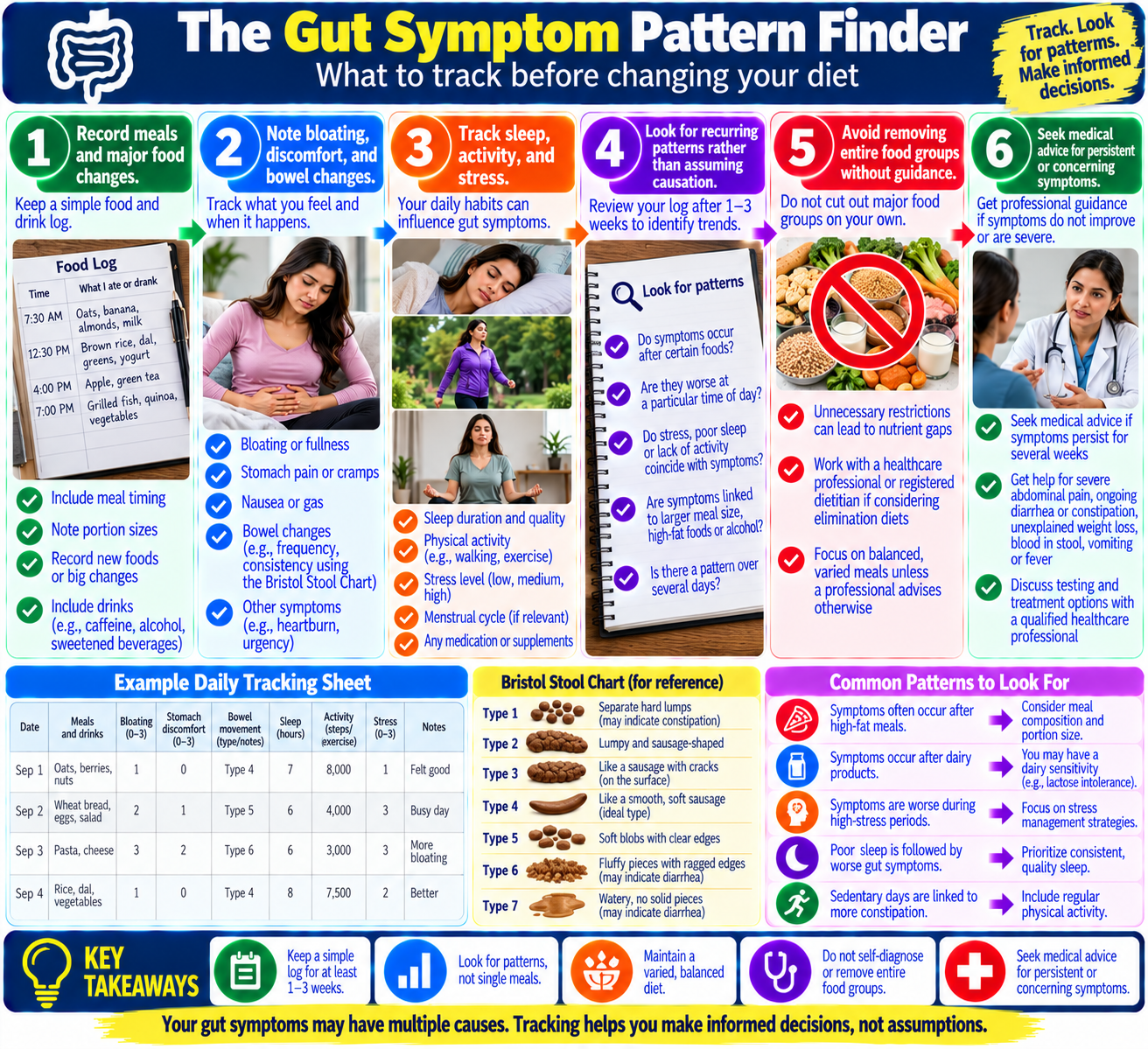
Many online gut-health plans focus on buying a product or following a strict food list. A more useful approach is to observe how your own routine relates to symptoms without assuming that every symptom is caused by your microbiome.
For one or two weeks, you could note:
- Meals and major food changes
- Bowel movement frequency and consistency
- Bloating, pain, or other symptoms
- Sleep and activity patterns
- New medicines or supplements
Keep the record simple. You are looking for useful patterns to discuss with a clinician, not trying to diagnose yourself. Avoid removing large groups of foods based on a short observation, especially if doing so could reduce your nutritional intake.
If a food repeatedly appears to trigger symptoms, consider discussing the pattern with a healthcare professional or registered dietitian before making major restrictions. Broad elimination diets can make eating unnecessarily difficult and may leave nutritional gaps.
Common Gut Health Mistakes to Avoid
Expecting instant results
Dietary changes do not produce the same effects in everyone. Bowel habits may change gradually, and a new food can initially cause discomfort. Give reasonable changes time, but do not ignore worsening symptoms.
Adding too much fiber too quickly
A sudden jump in fiber can increase gas and bloating. Start with small changes and increase gradually according to your tolerance.
Treating every fermented food as a probiotic
Some fermented foods contain live microorganisms, while others may be heat-treated or processed in ways that reduce live cultures. Read product information instead of assuming all fermented products are equivalent.
Taking supplements without a clear reason
A higher number of probiotic strains or a more expensive product does not automatically mean better results. Evidence is specific to the product, strain, dose, and condition.
Believing that all digestive symptoms mean an unhealthy microbiome
Bloating, constipation, pain, and diarrhea have many possible causes, including food intolerance, medication effects, infection, and gastrointestinal disorders. A microbiome explanation should not replace proper assessment.
Using detoxes or cleanses
The body does not need a commercial gut cleanse to remove ordinary waste. Unproven products may cause diarrhea, dehydration, or interactions with medicines. Choose evidence-based habits instead.
Latest Research: What Scientists Know—and What Remains Uncertain
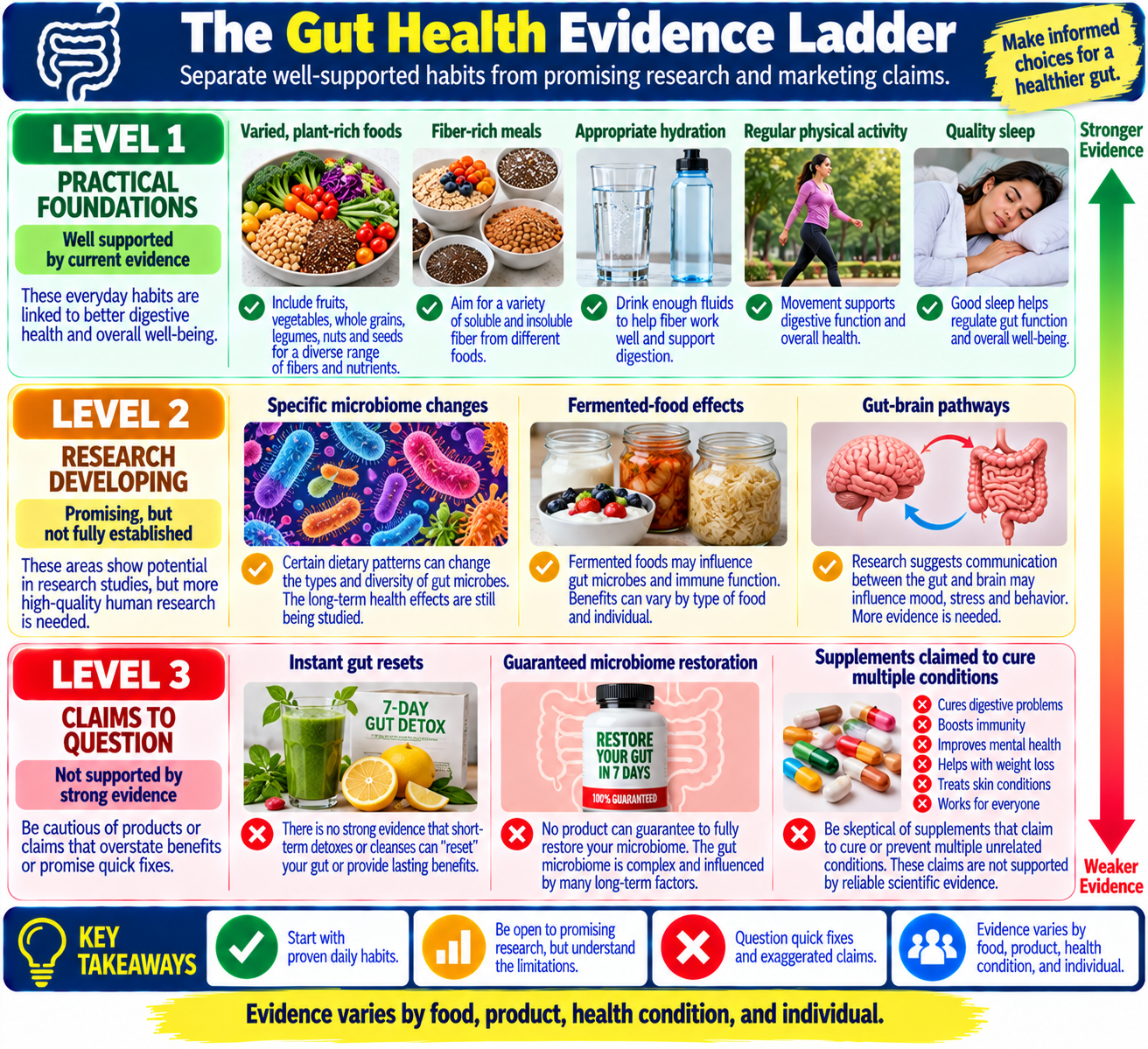
Gut microbiome research is moving beyond broad claims about “good bacteria.” Scientists are examining how food patterns, specific microbial functions, and interactions among microorganisms relate to measurable health outcomes.
A few findings are especially relevant to everyday decisions:
Fermented foods are being studied for digestive outcomes. A systematic review published in 2025 pooled randomized trial data and reported possible improvements in several gastrointestinal outcomes in healthy adults. However, the certainty of evidence varied and was often low, and the studies did not establish that every fermented food has the same effect. Read the full review.
Dietary fiber remains a practical foundation. Fiber-rich foods provide material that gut microorganisms can ferment, and different foods supply different types of fiber. A diverse, balanced eating pattern is more useful as a general strategy than chasing one supposedly ideal microbiome profile. See Harvard’s microbiome overview.
Probiotics are not interchangeable. Research findings for one strain or medical condition cannot automatically be applied to another product or to general wellness. Harvard’s probiotics guidance explains why product-specific evidence matters.
Gut-brain research is promising but not a shortcut to treatment. Scientists are exploring how diet and microbial activity may relate to brain and emotional functioning. The evidence is still developing, so claims that a food or supplement can reliably treat anxiety, depression, or cognitive problems through the microbiome go beyond what current evidence establishes. Review the research on fiber, fermented foods, and the gut-brain axis.
The most responsible conclusion is that gut health is an active research area, not a finished set of rules. The best-supported everyday approach remains a varied diet, gradual fiber intake, suitable food choices, regular activity, and medical care when symptoms warrant it.
When Should You See a Healthcare Professional?
Lifestyle changes may support general digestive health, but they are not enough for every condition. Seek medical advice if you experience persistent or recurring abdominal pain, ongoing diarrhea or constipation, unexplained weight loss, repeated vomiting, or a lasting change in bowel habits.
Seek urgent medical care for severe or sudden abdominal pain, significant rectal bleeding, black tarry stools, fainting, or signs of serious dehydration. If you have blood in your stool or unexplained weight loss, do not delay assessment while trying dietary remedies.
Children, older adults, pregnant people, and those with chronic illnesses may need individualized advice. People who are immunocompromised should speak with a healthcare professional before using probiotic supplements or making major dietary changes.
Frequently Asked Questions
What is the fastest way to improve gut health naturally?
There is no guaranteed fast fix. Start with manageable changes, such as adding a fiber-rich food to a meal, drinking fluids regularly, and building a consistent daily routine. Increase fiber gradually to reduce the risk of gas and bloating.
Which foods are best for gut health?
Useful options include beans, lentils, oats, whole grains, vegetables, fruits, nuts, and seeds. Yogurt with live cultures and other suitable fermented foods may also be helpful. The best choices are foods you can eat regularly and tolerate comfortably.
Are probiotics necessary for everyone?
No. Probiotics may be useful in particular situations, but benefits vary by strain and condition. They are not essential for every healthy person, and a supplement should not replace medical care.
Do fermented foods improve gut health?
They may help some digestive outcomes, but effects vary by food and individual. A 2025 systematic review found potential benefits in several gastrointestinal measures, while also reporting that the certainty of evidence was often low. Read the study.
Can stress affect digestion?
Yes. The gut and brain communicate through several pathways, and stress may influence digestive symptoms in some people. However, persistent symptoms still need appropriate assessment; they should not automatically be attributed to stress.
Should I take a probiotic after antibiotics?
Not automatically. The right approach depends on the antibiotic, your health, and the reason for treatment. Ask your healthcare professional whether a probiotic is appropriate for your situation, and do not stop or change prescribed medicine without advice.
How long does it take to improve gut health?
There is no universal timeline. Some bowel changes may happen relatively quickly, while other effects of dietary habits vary and may take longer to evaluate. Focus on sustainable changes and seek medical advice if symptoms persist or worsen.
Is bloating always a sign of poor gut health?
No. Bloating can occur for many reasons, including eating patterns, constipation, food intolerance, and gastrointestinal conditions. Frequent, severe, or persistent bloating deserves medical attention, especially when accompanied by other concerning symptoms.
Conclusion: Build Gut Health Through Consistent Habits
Learning how to improve gut health naturally does not require a complicated supplement routine or a strict list of forbidden foods. Start with a varied diet that includes fiber-rich plants, add suitable fermented foods if you enjoy them, drink enough fluids, stay active, and protect your sleep routine.
Make changes gradually and notice what works for your body. Avoid treating every digestive symptom as a microbiome problem, and be skeptical of products that promise an instant gut reset or claim to cure multiple conditions.
The strongest practical strategy is not to chase a perfect microbiome. It is to develop everyday habits that support nutrition, digestion, and overall well-being while seeking professional care when symptoms need more than lifestyle advice.
Author Note
Author: RVLNSV PRASAD
This article is intended to help readers understand practical, evidence-informed approaches to digestive wellness. Research on the gut microbiome continues to evolve, and the effects of specific foods, supplements, and lifestyle changes can differ between individuals.
Personal-experience note: Add a brief first-person example here only if it reflects your genuine experience—for example, a real change you made to your meals or daily routine and what you actually noticed. Do not present an invented personal story or another person’s experience as fact.
Medical Disclaimer
This article is for general educational purposes only and is not a substitute for professional medical advice, diagnosis, or treatment. The information does not establish that a particular food, supplement, or routine can prevent or treat a medical condition. Consult a qualified healthcare professional about persistent symptoms, medical conditions, medication use, or major dietary changes.
Fitness Disclaimer
Physical activity recommendations should be adapted to your fitness level, abilities, and health status. Start gradually if you are inactive. If you have a chronic condition, an injury, or concerns about exercising safely, seek guidance from a qualified healthcare professional.
Sources
- Harvard T.H. Chan School of Public Health — The Microbiome
- Harvard Health Publishing — How to Feed Your Gut
- Mukherjee et al. (2025)—Impact of Fermented Foods Consumption on Gastrointestinal Wellbeing in Healthy Adults: A Systematic Review and Meta-Analysis
- Harvard T.H. Chan School of Public Health — Probiotics for Gut Health
- PubMed — Review of Fiber, Fermented Foods, and the Microbiota-Gut-Brain Axis
- US National Institutes of Health — Dietary Fiber: Health Professional Fact Sheet
- US Centers for Disease Control and Prevention — Physical Activity Guidelines for Adults
Related Topics
- Category
- Train Smarter, Not Harder: Optimizing Workouts for Maximum Results
- The American Wellness Revolution: How to Thrive in a Fast-Paced World
- Nutrient-8 Dense Foods for Immune System Support: A Comprehensive Guide to Boosting Your Immunity Naturally
- The Best 5 Foods to Eat for a Healthy Gut
- 6 Natural Foods to Improve Digestion and Gut Health: A Comprehensive Guide
- 15 Effective Ways To Lower Your Cancer Risk
- Natural Remedies for Boosting Immunity with Plants: A Comprehensive Guide












[…] Gut Health Revolution: How Nutrition Shapes Your Microbiome […]
[…] Gut Health Revolution: How Nutrition Shapes Your Microbiome […]
[…] Gut Health Revolution: How Nutrition Shapes Your Microbiome […]